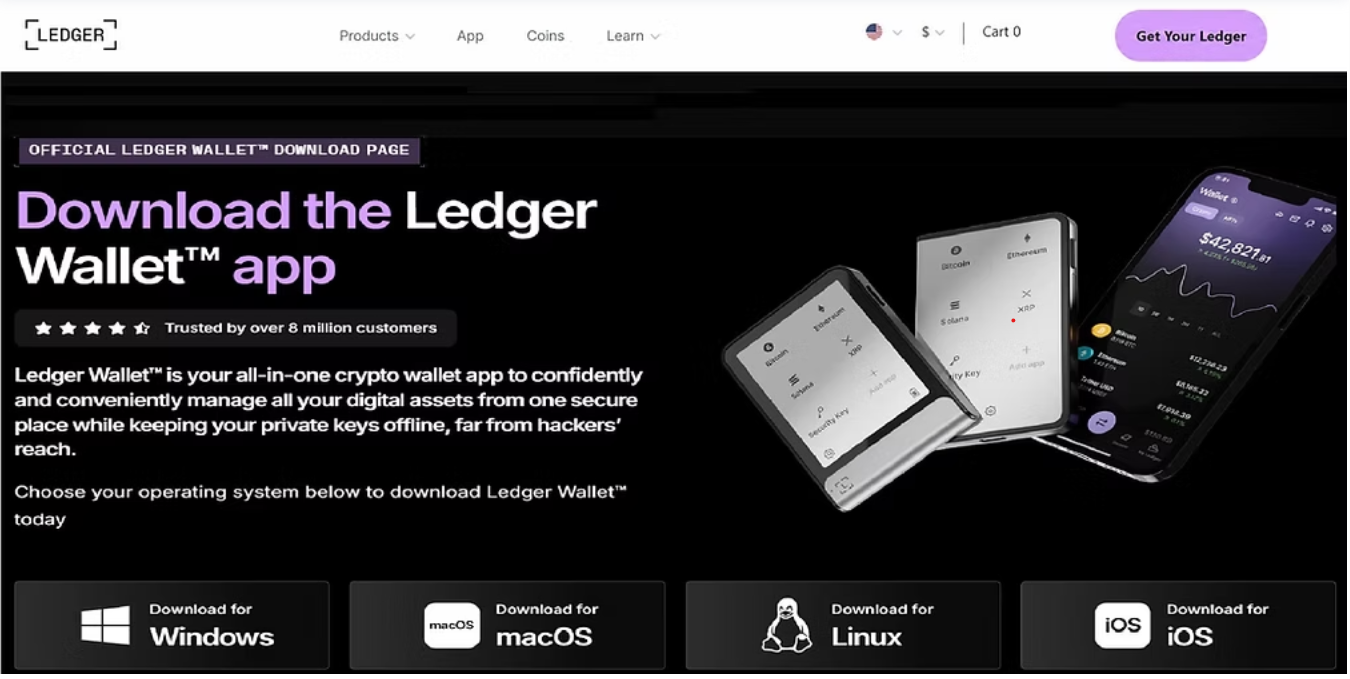
Managing digital assets becomes much easier when you have a reliable interface for viewing balances, checking transactions, and interacting with your hardware wallet. Ledger Live, now presented within Ledger’s software ecosystem, is designed to help users manage supported crypto assets while keeping private keys protected by a Ledger hardware wallet. If you are looking for information about Ledger Live Login, understanding the correct login process and basic security practices can help you avoid common mistakes.
Ledger Live Login refers to accessing the Ledger software environment so you can manage your connected Ledger device and supported cryptocurrency accounts. Unlike a traditional banking service, Ledger does not work by simply giving you a username and password that controls your private keys.
Your Ledger hardware wallet remains an important part of the security process. Transactions generally require confirmation on the physical device, helping keep sensitive signing operations separated from your computer or smartphone.
Before using any Ledger-related service, make sure you are obtaining the application or information from an official Ledger source. Avoid advertisements, unofficial download pages, suspicious browser extensions, and websites that ask for your recovery phrase.
Getting started with Ledger Live can be straightforward when you follow a careful process:
Ledger Live can offer several practical benefits for people using compatible Ledger hardware wallets.
Instead of checking multiple services separately, users can view supported accounts and assets through one interface. This can make everyday portfolio monitoring more convenient.
A Ledger hardware wallet keeps private keys away from ordinary computer storage. Transactions can require physical confirmation, adding another layer between your assets and potential online threats.
The Ledger software environment is designed to make common wallet tasks easier to understand. Users can review account information, transaction activity, and supported features from a single application.
Reviewing transaction information before confirming it can help users identify incorrect addresses, amounts, or network details. Taking a few seconds to verify information can prevent costly mistakes.
Hardware wallets are built around the principle that private keys should remain protected rather than being exposed to websites or ordinary applications. However, no wallet eliminates every risk, so safe user behavior remains essential.
Sometimes users may think they have a login problem when the actual issue is related to the device, application, or connection.
If Ledger Live does not recognize your hardware wallet, check the USB or Bluetooth connection where applicable and make sure the application is updated through legitimate channels.
If the application displays an unusual security warning, do not ignore it. Stop and verify that you are using the genuine Ledger software.
A particularly important rule is this: never enter your 24-word recovery phrase into a website, pop-up, email form, chat message, or ordinary computer application. Your recovery phrase is extremely sensitive. Anyone who obtains it may be able to control the associated assets.
Security should remain a priority whenever cryptocurrency is involved. Always verify website addresses before downloading software or following instructions. Keep your Ledger device and recovery phrase private, and never photograph or digitally store your recovery phrase in an insecure location.
Be cautious of urgent messages claiming that your wallet will be suspended unless you “verify” your recovery phrase. These are common characteristics of phishing attempts.
Also, remember that cryptocurrency transactions can be difficult or impossible to reverse. Before confirming a payment, verify the recipient address, network, and amount directly on your Ledger device.
No. Ledger uses a different security model. Your hardware wallet plays a central role in controlling and approving transactions, rather than relying solely on an online username and password.
A legitimate Ledger service should not ask you to enter your recovery phrase into a website, support chat, or pop-up window. Keep the phrase offline and private.
Check the cable or supported wireless connection, restart the application, and follow official troubleshooting guidance. Avoid downloading unofficial “fixes” from unknown websites.
You should always review important transaction details on your Ledger device before approving them. A quick verification can help catch errors or suspicious requests.
Use only official Ledger software and carefully inspect website addresses. Do not trust unsolicited emails, advertisements, social-media messages, or pop-ups requesting your recovery phrase or private information.
A secure Ledger Live Login experience is less about remembering a password and more about using the correct Ledger software, connecting your genuine hardware wallet, and protecting your recovery information. By downloading applications from official sources, verifying transactions on your device, and refusing requests for your recovery phrase, you can significantly reduce common security risks.